


Yoga for Athletes
WHY EVERY ATHLETE SHOULD DO YOGA

You are an athlete. You are driven, determined, and focused. You know what you want, and you go hard to get it. Run farther, climb higher, cycle faster, drive longer… There is always another level of greatness to achieve. You want it. You crave it. It’s the desire to be, well, your best.
But greatness and bestness, for lack of a better word, don’t come without a price. Chronic tightness, muscle fatigue, cramping and injury are real consequences of training. No one wants to be sidelined. No one wants the DNF (did not finish), and no one wants to hear the dreaded words “you need surgery.”
Yoga is not a cure for overtraining, overuse, or just bad choices, but it is a wonderful prevention tool. By incorporating Yoga into your training program, you are rewiring your body to process information differently. You learn the limitations and tight areas of your body, and you learn to release that tension with certain poses and asana sequences. It’s truly a controlled environment for exploring your body’s strengths and weaknesses. And it is a key ingredient in your success as an athlete.
In my opinion, every athlete, regardless of sport or discipline, can enhance their abilities by adopting a consistent Yoga practice. In fact, you may be at a disadvantage and miss an opportunity to reach peak performance if you are not practising Yoga.
So why isn’t every athlete out there doing it? Here lies the irony. Most athletes I’ve talked to believe that flexibility is a requirement for doing Yoga. If I, the athlete, believe this to be true, then when I show my inflexibility by being unable to do a pose, I am exposing my weakness. As an athlete, I’m not going to do that, so, in this case, I’ve already made up my mind that Yoga is not for me.
Another myth is that Yoga is an easy, hippie-style of exercise made primarily for women. Again, if I am an athlete, I won’t see the benefit in wasting my time on “easy”, and unless I am a single male, I might shy away from Yoga if I think it’s more of a social hour for girlfriends.
But what if I told you that chronic tightness and inflexibility were the norm in most classes? That more men are recognising the benefits of Yoga and can be found in almost any class you take, that women are strong, and that, by practising Yoga, you will develop whole body strength. These are the real truths of Yoga.
Here are the glorious benefits. And honestly, these are only a few of the biggies.
IMPROVED STRENGTH
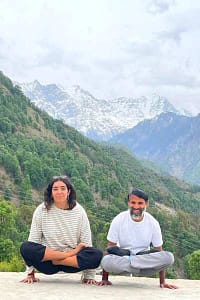 Yoga is not easy. It is a whole-body system workout. With consistent practice, you will build strength and stamina in both your major muscles and under-utilised or under-developed muscle groups, leading to better overall stability and function. This balanced body system significantly reduces overuse injuries and allows you to perform at an optimal level for longer periods.
BALANCE
Besides gymnasts and maybe tightrope walkers, most of us seek to have better balance. Let me first say that genetics may come into play here for some, so if that’s you, cut yourself a break. (ie, the 5’9” person with size 5 feet). Finding balance means learning to find your centre of gravity as you move your body through space. Because Yoga’s focus is on discovering how the body works in every pose, you get a lot of practice. Coordination and improved balance lead to better technique, whether your focus is on your golf swing, your swim stroke, or your stride.
FLEXIBILITY
Flexibility isn’t about how bendy you are. It refers more to the range of motion at your joints. The harder you train, the tighter you become. A tight muscle is a shortened muscle, and unless you are working to lengthen those muscles out, you will have chronically tight areas that have limited motion with a high likelihood of injury over time. Yoga invariably improves joint and muscle flexibility, leading to an increased range of motion. Enhanced muscle economy means better athletic performance, healthier muscles and joints, and decreased likelihood of overuse. Win-win!
MENTAL CONTROL
No doubt that the physical benefits are huge. But what separates a good athlete from a great one? The mental game. Focus. Most Yoga classes will incorporate breathwork. The connection to breath allows you to connect more completely to your body. Your breath tells you how your body is doing, and by learning to observe and control it, you make great strides in your mental well-being. Staying calm and centred is vital for athletes, especially when external stimuli are all around… the screaming fans during overtime, the crowd at a road race, the spectators at a meet, and other competitors. The athlete must learn how to tune it all out and stay focused on the prize. Yoga requires constant attention to the rhythm and staying centred on the self.
TOTAL RELAXATION
Savasana, or corpse pose, might be the most challenging of all poses since it requires stillness, but it’s probably the most important and beneficial. It’s a pose at the end of class in which you allow your body to rest on your mat fully. Lying in stillness and doing nothing is very difficult for many people, especially athletes who are used to optimising every hour of their day. But this is the part of class where you learn to quiet the constant chattering mind that often fills the brain with negative, fear-based thoughts. It’s like mentally cleaning house, allowing you to reset and refocus your mind. Allowing you to unleash your unwavering, fullest potential.
In closing, practising Yoga will help you gain overall body strength, increase your flexibility and balance, improve the range of motion in your muscles and joints, and hone your focus. In a nutshell, Yoga will help you become a better athlete and increase your likelihood of longevity in your sport.