


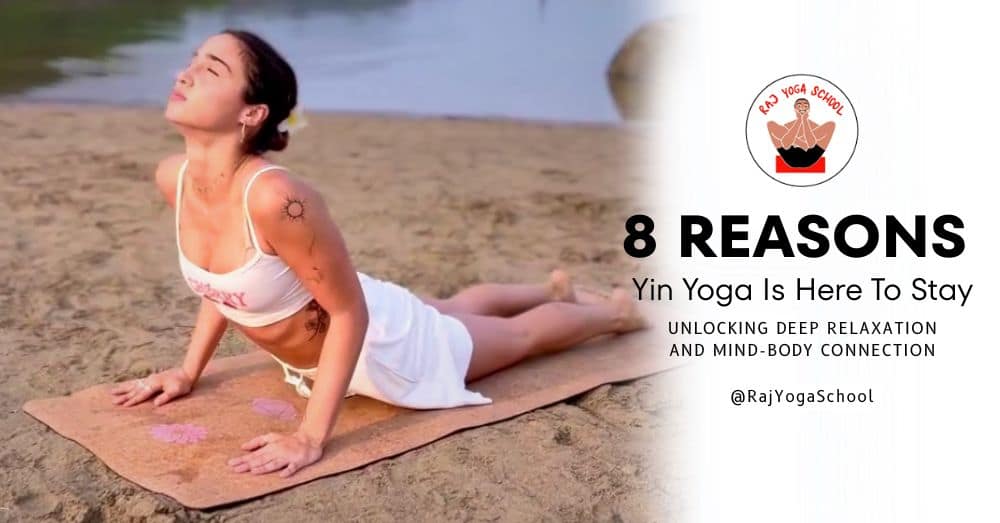
8 Reasons Yin Yoga Isn’t Just a Trend — It’s a Lifestyle
In the last few years, Yin Yoga has seen exponential popularity. What was once delegated to a single Sunday night session has infiltrated multiple weekday time slots on Yoga studio timetables everywhere. You can even find Yin Yoga classes popping up in CrossFit gyms and fitness centres. Yin Yoga is definitely on the rise, so what is it about holding simple shapes for a few minutes that draws so many of us to the inside?
-
Yin Yoga is an expression of feminine energy.
Yin and Yang, Dark and Light, soft & hard. Everything in the world is made up of varying degrees of these two energies. Yang represents the masculine or active, solar energy. The energy we need to make ‘stuff’ happen in the world to get where we’re going, to achieve and to move forward. Yin represents the feminine, receptive, lunar energy. The type of energy we need to rest, restore, nourish and receive. You don’t need to be a yogi to see that our current world has an overly masculine energy, or yang energy. We value progress, growth, expansion and productivity. This imbalance has led to the masculine being seen as valuable and the feminine being seen as unnecessary. This has resulted in many far-reaching adverse consequences on a personal level, stress, striving, burnout, and a lack of contentment and on a larger scale, the devastation of our natural world in favour of the economy.
Yin Yoga is an expression of the feminine (not to be confused with female) energy, which consciously, or unconsciously, we all crave because we’re so out of balance. In my opinion, this is really the overall reason so many people are drawn to Yin Yoga; the reasons that follow are just little subsidiary branches of this central theme.
-
Yin Yoga provides the perfect counterbalance to strength and cardio-based fitness.
With the rise in popularity of strength and conditioning programs like CrossFit, F45 and HIIT, staying fit has taken on a decidedly more yang approach. Even many more ‘traditional’ forms of exercise, like running, power Yoga, and working out at the gym, are still yang in nature. However, just as I noted before, yang is only one 1/2 of the whole. Yin Yoga offers an expertly paired counterbalance to other Yang forms of exercise. Yang exercise works the yang parts of the body, namely the muscles. Yin Yoga, on the other hand, romances the yin tissues, fascia, ligaments, bones, joints and organs. In the initial stages, say, the first 1–2 minutes in a posture, Yin Yoga also offers a deep release of muscular tension held/created in the body by other forms of exercise, postural misalignments, or even trauma.
Adding Yin Yoga to an otherwise Yang exercise program will help to maintain range of motion, supple connective tissue and a balanced nervous system.
-
Yin Yoga is an ideal gateway into meditation.
Meditation: we all know how much benefit we would receive from doing it, but why do so many of us put it off, or tuck it neatly into the ‘ too hard ‘ basket? My theory is that it’s too much of a stretch, too different, too foreign. Imagine you are standing firmly on one side of a cliff, grounded in the reality of day-to-day living: waking up, going to work, making shit happen, coming home, cooking dinner, and going to sleep, only to repeat the next day. On the other side of the cliff, meditation floats ethereally between… a considerable gap. It’s just too big a leap. For many of us, Yin Yoga can be a bridge from one side to the other.
Yin Yoga feels familiar enough for most people to try without hesitation. You practice on a Yoga mat, which doesn’t require any special skills or abilities. The physical sensations we create in yin Yoga poses help keep your mind grounded in the present moment. It feels like the most wonderful way to release deeply held tension. But while you go about the business of holding poses for 2, 5 or even 10 minutes, you have this golden opportunity to sample bite-sized chunks of meditation.
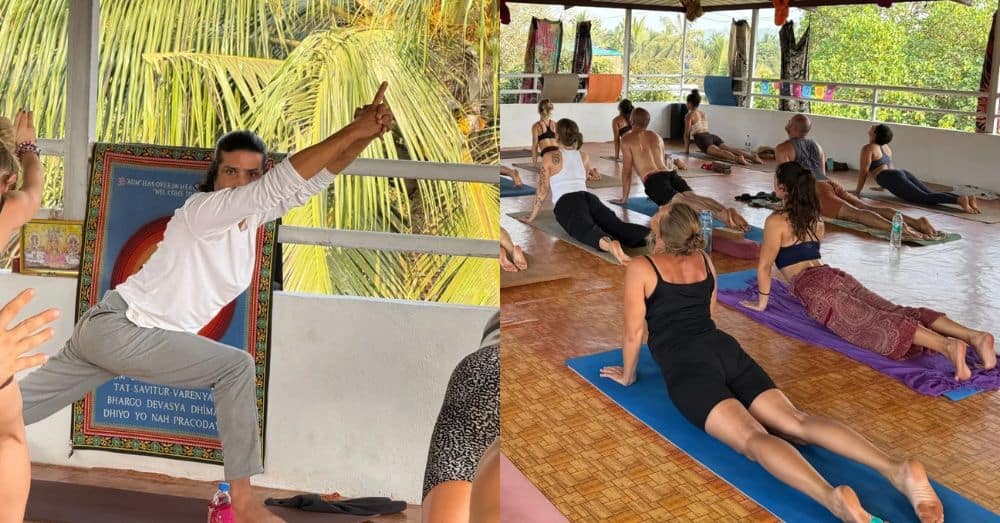
During the practice, your teacher may guide you to work with an inner method, such as mindfulness, visualisation, or concentration, perhaps switching with each change in posture, or exploring the same method throughout the whole practice. This initial taste of meditation can show students how amazing it feels to take a temporary break from their own mental dialogue. This embodied experience is often enough to give an individual the confidence and desire to sign up for a meditation course, go on a retreat or start a home practice. I’ve seen it time and time again, and I grin with a knowing smile each time I hear a new account of someone finally getting into meditation after a few months of practising yin Yoga.
Not to mention, on an efficient level, the physical practice of Yin Yoga makes a seated meditation practice much more comfortable and sustainable by releasing tension in the hips, knees and lower back.
-
Yin Yoga offers people a practical way to slow down.
Those little idle moments, when we are neither coming nor going but are precisely where we are, are necessary for living a creative and fulfilling life. However, in modern life, moments like these are quickly sacrificed to the cult of busy. I grew up in the country, where life moves at what can be, for a 16-year-old, an excruciatingly slow pace. I can recall one of the more interesting ways that I would pass the time, staring out the window, watching the leaves of birch and apple trees dance in the wind. My mind was unoccupied with to-do lists or even the awareness that I should be somewhere other than where I was. These days, I have to fight to protect and defend the right to have even a few moments like this every week.
Yin Yoga offers you many moments like these, all within a single class. In a yin practice, there are bound to be periods of space and silence in each pose. Once in the pose, the goal is often to ‘do‘ less, and sometimes even to ‘do‘ nothing. Through these enforced moments of slowing down, we can learn how to reconnect with what life was like before social media notifications, overflowing schedules and the constant need to be productive.
-
Yin Yoga gives us specific tools to manage our emotions.
All Yoga works on the mind-body-spirit level, whether we are conscious of it or not. The body-mind is not a separate entity, or islands in themselves; they are intimately connected to a degree that we are only beginning to understand scientifically. Therefore, even if you show up to a Yoga class that is ‘ just a workout ‘, you are no doubt causing some effect in your mind. The practice of Yin Yoga takes it a step further by creating specific, targeted effects in the mind through stimulation of the meridian channels and organs, as based on Traditional Chinese Medicine. According to TCM, each organ is associated with a particular emotional state when balanced and a different one when unbalanced. This, of course, is a vast oversimplification of an expansive technology developed over thousands of years for understanding the human being. However, even a basic understanding of which poses can balance which emotional states can be a valuable tool in the On Being Human manual.
-
Yin Yoga is incredibly accessible, but not easy.
The poses of Yin Yoga are very un-glamorous. Most of the time, yin poses are created lying down or seated and use various props, depending on an individual’s skeletal structure and history. There is very little concern about the aesthetic appearance of the pose, and there is absolutely no cajoling the body into an idealised form. This lack of focus on the way the poses look can allow beginners to practice alongside yogis of all experience levels without comparison. This naturally weeds out any sense of competition, as there is no ideal pose we strive towards. The result is a practice that is very accessible, even to those who have never set foot in a Yoga room.
On the other hand, Yin Yoga is not a walk in the park. There is often a considerable challenge involved; sometimes an intense physical sensation, other times mental resistance.
-
Yin Yoga is acceptance-based – allowing people to temporarily suspend their need to achieve.
There’s nowhere to go, nowhere to get to other than here. Yin Yoga sequencing typically doesn’t work up to a ‘peak pose’ the way a hatha or vinyasa class might. There are no primary, intermediate or advanced sequences lurking on the horizon. Progress is not measured by how much you can deepen an asana over time. While these things are not problematic in and of themselves, I believe we’re suffering from ‘need-to-achieve ‘ fatigue. In our relationships, we get worried when there isn’t external progress (the engagement, the house, the kids, etc.). In our work life, we constantly strive to move forward, to progress. As a society, we want to keep growing, advancing, and becoming better than we are now.
Yin Yoga offers us a rare time and place where we are actively encouraged to surrender our need to achieve.
-
Yin Yoga engages the PSN – Parasympathetic Nervous System (i.e The Rest & Digest System)
This isn’t breaking news; if you’re interested in health and well-being, you will be aware that many of us are walking around with an overactive / chronically engaged Sympathetic Nervous System ( SNS ). The SNS is part of the nervous system responsible for the fight-or-flight/freeze response. While all Yoga can have a positive impact on rebalancing an individual’s nervous system, yin Yoga is especially suited to this task. The entire class is focused on slowing down, becoming still, releasing tension and cultivating mindful presence. This can have a dramatic impact on the practitioner, even after a single class. Many of my students have told me that the only time during their week when they feel truly and deeply relaxed is after a yin class. The health benefits of supporting the PNS are incredible, especially for those who struggle with anxiety, overwhelm, digestive issues, chronic illness, and the list goes on. Of course, there are many ways to encourage PNS activation, but for many people, Yin Yoga offers an affordable, regular, and accessible way to explore these benefits.
Yin Yoga is more than just a passing wellness trend; it’s a timeless practice that meets the needs of our fast-paced, overstimulated modern world. Its slow, meditative approach offers balance, stillness, and a deep connection to both body and mind. As more people seek mindful movement, stress relief, and sustainable well-being, Yin Yoga continues to grow in relevance and popularity. Whether you’re a beginner or a seasoned practitioner, embracing Yin Yoga can be a transformative way to restore harmony within and find calm amid life’s constant motion.