


Vinyasa- The Centre of your Practice
The flow that brings your practice into balance

Learning the correct Vinyasa technique is one of the most important things to nail in your Yoga practice. If you consider how many times we move through a Vinyasa during each yoga practice, it becomes clear how repetitive these movements are. If we’re putting negative strain through these joints many times within one practice, that strain is repeated many times a week and then many times over the year. Over time, we accumulate a large amount of negative load throughout the body, which can eventually lead to injury. At Raj Yoga School, we have a strong emphasis on correct technique for Vinyasa & we aim to teach you the foundation of the Vinyasa through a beginner’s course, & then we continue to teach you correct technique as your strength builds so that you can practice Vinyasa through the Yin Hatha & Hatha Vinyasa classes at the studio.
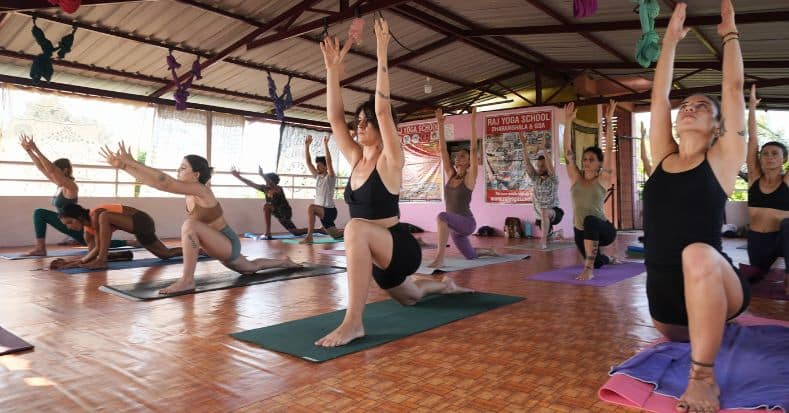
So some of the essential things to remember are:
- Always move with your breath: when you exhale, begin the movement from plank to chataranga. You hold the chataranga position until your inhale begins & then you begin your movement to upface dog.
It’s common to shorten the inhale in the up dog. I encourage you to lengthen your inhale, fill your lungs, & then, when your exhale starts, begin your movement to down dog.
The movement from Chaturanga to Upward-Facing Dog, and then from Upward-Facing Dog to Downward-Facing Dog, is one of the most challenging transitions in our practice to perform with awareness and care. It takes most people years to develop the strength needed to practice our Vinyasa with complete integrity. It is often underestimated just how strong this movement is.
Some other great cues to keep in mind along the way are: when moving from chataranga to upface dog, avoid a crushed-toe feeling; press your toes down firmly on your mat to protect your joints as you roll over into upface dog.
- When moving from upface dog to downface dog, position your body so you can activate your core strongly before lifting your hips into downface. Many people will overuse their lower back muscles here. From Upward-Facing Dog, begin the transition by gently leading with the head. Allow the shoulders to round, and then guide the body forward until you arrive in a strong, stable High Plank position. Squeeze the upper abdominals & then press your way back to downface dog.
If you have questions about your Vinyasa, please ask your teacher at At Raj Yoga School. We offer a variety of Vinyasa workshops so you can really work hard to make this part of your practice safe and integrated, building a strong, long-lasting practice.